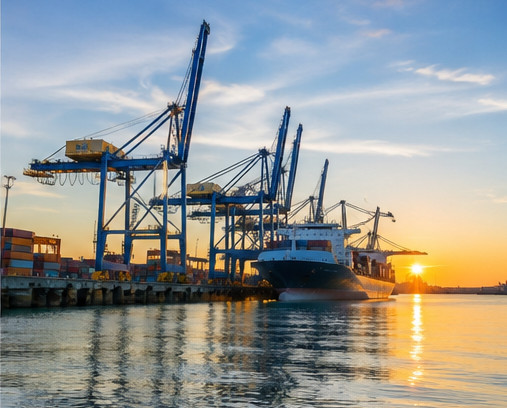

Smart Ports and Sustainable Maritime Transport
Maritime transport is responsible for moving nearly 90 percent of global trade, making ports one of the most important gateways for international commerce. As global demand continues to grow, ports are embracing digital transformation to improve efficiency, reduce environmental impacts, and strengthen supply chain resilience. Smart ports represent the future of sustainable maritime transportation within the Blue Economy.
Digital Transformation in PortsModern ports are adopting advanced digital technologies to optimize cargo handling, vessel traffic management, and logistics operations while reducing operational costs.
- Artificial Intelligence for logistics management.
- Internet of Things (IoT) monitoring systems.
- Automated container handling.
- Digital port management platforms.
These innovations improve productivity while reducing waiting times and fuel consumption.
Green Maritime TransportationThe shipping industry is investing in cleaner technologies to reduce greenhouse gas emissions and improve environmental performance. Alternative fuels and energy-efficient vessels are becoming increasingly important.
- Low-emission vessels.
- Alternative marine fuels.
- Electric port equipment.
- Energy-efficient shipping operations.
These initiatives support international climate goals while maintaining efficient global trade.
Smart InfrastructureSmart ports integrate sensors, automation, cloud computing, and real-time communication systems to monitor infrastructure performance and improve operational safety.
- Predictive maintenance.
- Real-time traffic management.
- Digital security systems.
- Smart energy management.
Smart ports stimulate economic growth by increasing operational efficiency, attracting international investment, reducing logistics costs, and creating highly skilled employment opportunities in technology and maritime services.
Future VisionThe future of maritime transport depends on digital innovation, environmental responsibility, and international collaboration. By investing in smart infrastructure and sustainable technologies, ports can become key drivers of the Blue Economy while supporting global trade and protecting marine ecosystems.